

Last Updated on 07.07.2026 by Bosger
What Is PFAS-Free Packaging?
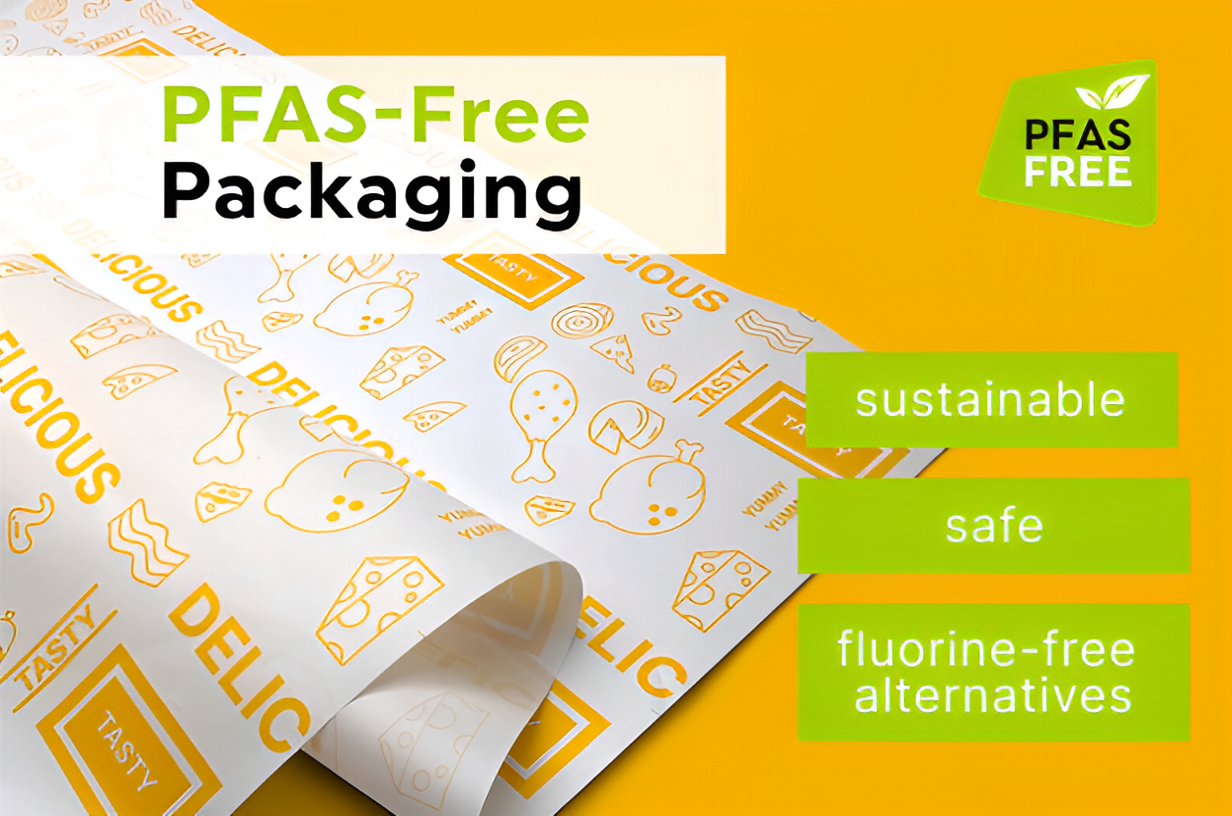
PFAS-free packaging refers to packaging materials that do not contain intentionally added per- and polyfluoroalkyl substances, commonly known as PFAS or “forever chemicals”. These substances have historically been used in food packaging to provide grease resistance, water resistance and heat resistance, especially in paper-based food wrappers, fast food packaging, bakery packaging, takeaway containers and greaseproof materials.
Today, more food producers, retailers, packaging converters and HoReCa suppliers are actively looking for PFAS-free food packaging because the industry is moving toward safer, more transparent and more sustainable materials. For brands working with butter, cheese, bakery products, confectionery, gastronomy products or ready-to-eat meals, choosing the right PFAS-free barrier packaging is becoming not only an environmental decision, but also a commercial and regulatory priority.
Why Are PFAS a Concern in Food Packaging?
PFAS are valued for their technical performance. They can help packaging resist oil, fat, moisture and heat. However, these same chemicals are also known for their high persistence in the environment. Global regulators are paying increasing attention to PFAS reduction and replacement.
In the European Union, the Packaging and Packaging Waste Regulation includes restrictions on PFAS in food-contact packaging, with application from 12 August 2026. This makes the transition to PFAS-free packaging materials especially important for companies that want to avoid last-minute reformulation, supply chain risks and compliance issues.
Where PFAS Are Commonly Used
PFAS have traditionally been used in food packaging applications especially in fatty, hot, wet or ready-to-eat foods, where untreated paper or fiber-based packaging may lose strength, absorb grease or fail during handling.
Typical application areas include:
- Fast food and takeaway packaging — wrappers, bags, trays and containers for burgers, fries, sandwiches and other ready-to-eat meals.
- Bakery and pastry packaging — bags, liners and wraps for croissants, pies, donuts, cookies and other products with butter, cream, oil or fillings.
- Pizza and hot food packaging — box liners, sheets and inserts that help manage grease and moisture.
- Dairy and butter packaging — wraps, interleavers and liners for products with high fat content.
- Confectionery and snack packaging — packaging for chocolate, coated sweets, nuts, chips and oily snacks.
- Coated paper and fiber-based packaging — grease-resistant paper, molded fiber containers, paperboard trays and other cellulose-based materials treated to improve barrier properties.
For many years, PFAS-based treatments were considered a convenient way to make paper and fiber packaging resistant to grease. But as regulations tighten and customers demand cleaner materials, the market is shifting toward PFAS-free grease-resistant packaging and fluorine-free food contact materials.
PFAS-Free Does Not Mean Low Performance
One of the biggest misconceptions in packaging is that PFAS-free materials cannot provide strong barrier performance. In reality, modern PFAS-free packaging films can be engineered to protect food from moisture, fat, contamination and mechanical damage without relying on fluorinated chemicals. For food producers, the goal is not simply to remove PFAS. The goal is to replace them with materials that continue to work in real production conditions.
A good PFAS-free packaging material should help protect the product during: filling and packing; storage; freezing or refrigeration; transportation; retail display; handling by consumers or operators.
It should also support the required shelf life, product appearance and food safety standards. So, when choosing a PFAS-free packaging supplier, food companies should evaluate not only the chemical composition, but also the complete performance profile of the material.
Important criteria include:
- confirmation that the material is PFAS-free;
- suitability for food-contact applications;
- grease and moisture barrier performance;
- mechanical strength;
- compatibility with packing equipment;
- printability;
- storage and transport conditions;
- sustainability profile;
- supplier technical support.
A PFAS-free packaging material should be chosen according to the real application conditions — from product type, fat and moisture exposure to required thickness, format, packing line compatibility and expected storage requirements.
Mineral Film SP: A PFAS-Free Packaging Solution by Bosger
Bosger’s mineral film is a PFAS-free packaging material designed for food applications where safety, protection and sustainability are essential. The material does not rely on intentionally added PFAS to achieve its functional properties, making it a suitable option for companies looking for PFAS-free food packaging, fluorine-free packaging and safer food-contact materials.
Mineral film SP can be used across a wide range of food packaging applications, including dairy&fat products, confectionery and bakery, gastronomy and HoReCa products.
Key advantages of Bosger’s mineral films include:
- food-safe and PFAS-free composition;
- moisture- and grease resistance;
- high mechanical properties;
- flexible thickness range;
- compatibility with industrial packaging processes;
- compatibility with flexographic, UV and digital printing;
- various supply formats.
For companies searching for PFAS-free food packaging film, fluorine-free packaging, safe food contact packaging or sustainable barrier film, Bosger’s mineral film SP offers a practical and future-oriented solution. It can help companies reduce dependence on traditional fluorinated or heavily coated materials while maintaining the technical properties required for food packaging.
The Future of Food Packaging Is PFAS-Free
The packaging industry is moving toward safer, cleaner and more responsible materials. As PFAS restrictions expand and customer expectations grow, food producers need packaging solutions that provide reliable protection without intentionally added fluorinated chemicals.
Bosger’s mineral films are PFAS-free packaging materials designed to help food brands, converters and HoReCa suppliers make this transition with confidence. They combine food packaging performance, practical processing and PFAS-free composition, making them suitable for companies looking for modern alternatives to conventional grease-resistant and barrier packaging.
Switching to PFAS-free packaging is not only about compliance. It is also a way to strengthen brand reputation, improve supplier transparency and prepare for future market requirements.